


Two knives of the same model can be a cheap knife and an expensive knife, and the finish is the difference. Here is what each common finish does with wear and with the pattern index, and what to look at before you pay. Doppler and Gamma Doppler have their own guide, so they only get a short note here.
What every knife finish shares
Wear shows on the blade edge and the tip first, then spreads across the blade. The float never changes after the item is created. The pattern index decides where the texture lands, and on a few finishes that decides most of the price.
Fade
A gradient from yellow through pink to purple. The float range is narrow, 0.00 to 0.08, so nearly every copy is Factory New and wear is limited to fine scratches at the edge. What matters is the pattern. The seed shifts the gradient along the blade, and the community measures how far the purple and pink reach across it as a fade percentage. A full fade with the yellow pushed back to a sliver costs the most. Check the playside.
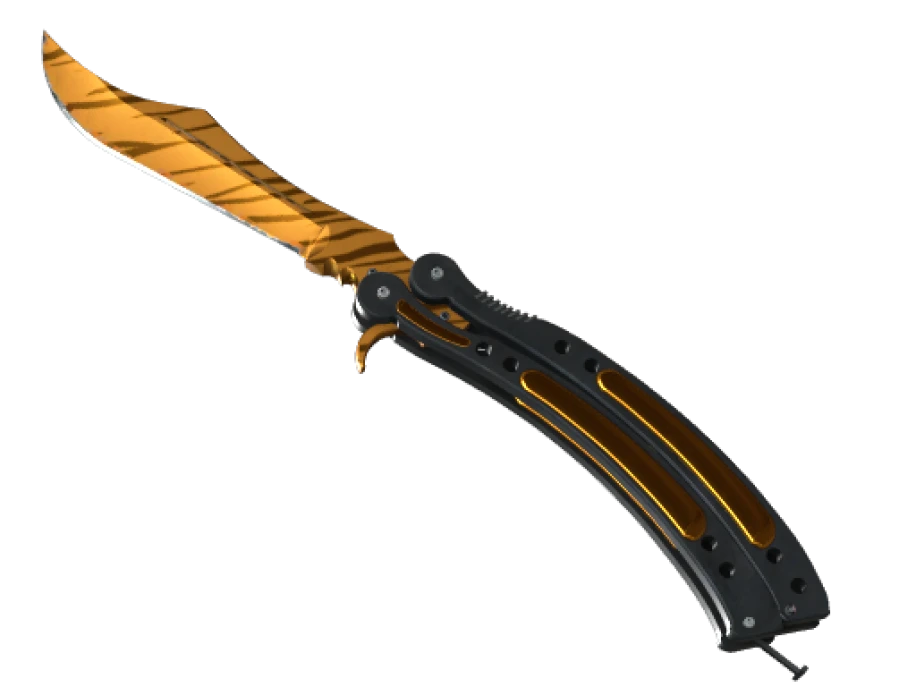
Tiger Tooth
Gold and amber metal with fine dark stripes. Same narrow range as Fade, 0.00 to 0.08. The pattern makes no visible difference, so every Tiger Tooth of the same model and float looks the same. That makes it the easiest finish to buy. Beyond the float there is nothing to get wrong.
Slaughter
Red anodized steel with pale streaks. The range runs from 0.01 to 0.26, so Factory New, Minimal Wear and the lower part of Field-Tested exist. Wear dulls the red and puts grey into the streaks, and it is easy to see on a Field-Tested copy. The pattern places the streaks, and some seeds form shapes people name: diamond, heart, angel, zebra. A clear shape centered on the playside adds a premium. A smear does not.
Lore
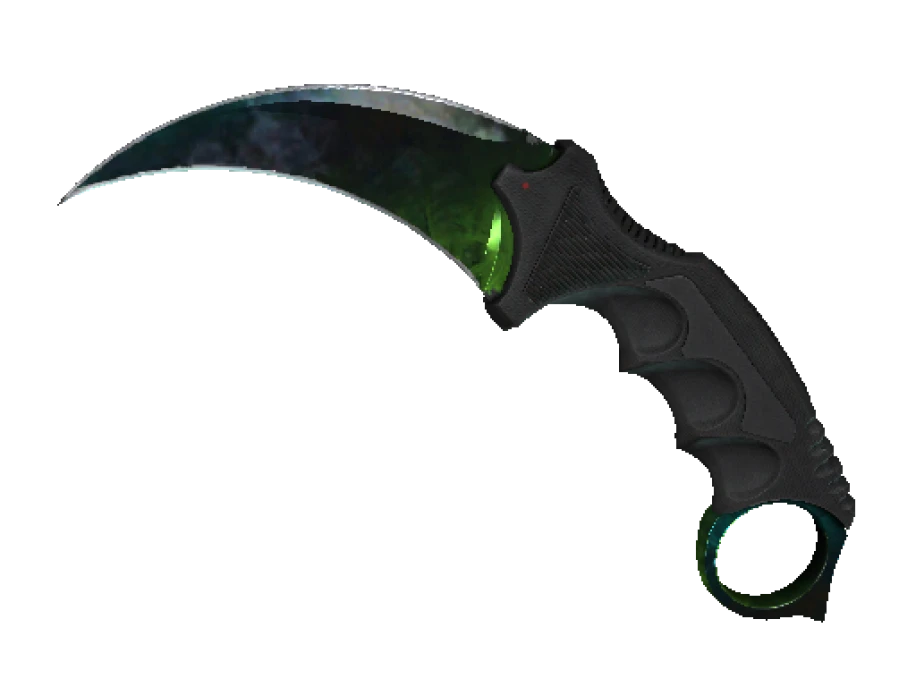
Dark green with gold engraving in a Norse knot style. The range is the full 0.00 to 1.00, so every wear rating exists. The gold wears first and goes to bare steel along the edge, and the green dulls with it. A Factory New Lore is bright and busy. A Battle-Scarred one is mostly grey with traces of gold in the grooves, and some buyers like exactly that. The pattern barely matters. Price is about float and model.
Marble Fade
Red, blue and yellow in a swirl, with a 0.00 to 0.08 range. The seed decides how the three colors split across the blade. Fire and Ice, red and blue with no yellow on the playside, is the prize. Near misses with a sliver of yellow at the tip are common and price far below a clean one, so check the tip closely.
Crimson Web
Deep red with black webs. The range is wide, 0.06 to 0.80, and the finish wears hard: the red darkens and the blade dulls as the float climbs. The seed decides how many whole webs land on the playside. Count them and check whether they are cut off at the edge. Judge float and web count together. A great web pattern on a scratched blade is worth much less than the same pattern clean.
Case Hardened
Blue, purple and gold mottling on bare steel, with the full 0.00 to 1.00 range. The seed sets the mix. Copies with a mostly blue playside are the blue gems, and the top seeds on a Karambit or a Bayonet are among the most expensive knives around. The rest trade close to base price. Wear greys the surface and mutes the colors, so a blue gem is judged on float too.
Autotronic
Red panels over exposed steel with a mechanical look, and the full 0.00 to 1.00 range. The red is what wears. At high float most of it is gone and the blade reads as scratched steel. The pattern does not matter, the float does.
The dark metallics
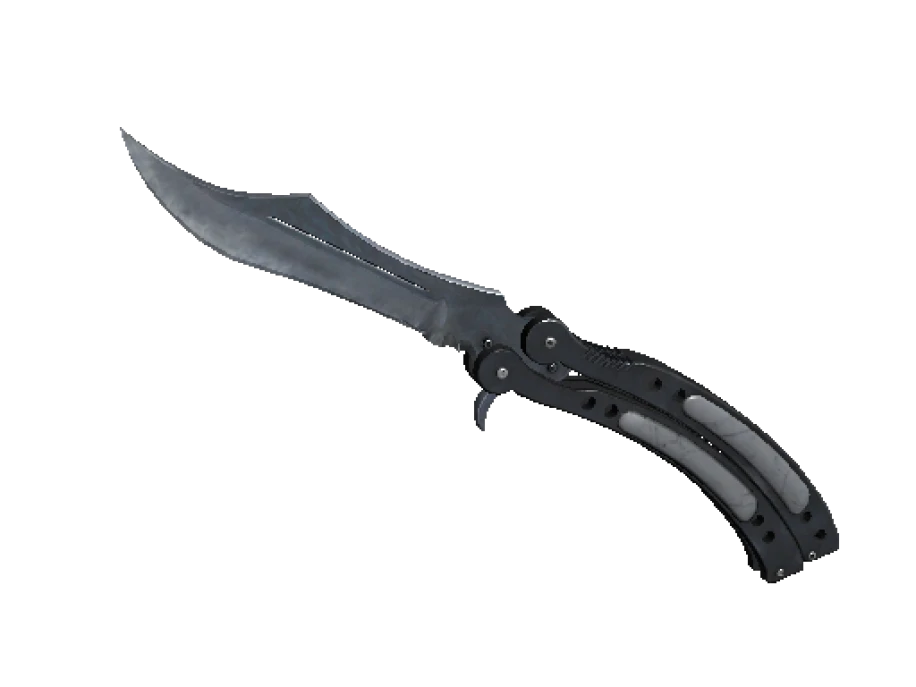
Night, Blue Steel, Ultraviolet, Damascus Steel and Black Laminate are the mid-priced finishes, and they all lose paint at the edge quickly. Night is dark blue-black. Ultraviolet is a black blade with a purple handle. Blue Steel is grey-blue with a mottled texture that changes with the seed, and some seeds carry more blue. Damascus Steel shows layered bands. Black Laminate is a dark grain over the whole knife.
On all of them a Factory New copy looks solid and a Field-Tested one shows a bright steel line along the cutting edge. Several of these finishes have a float floor above zero, so Factory New copies are scarce and cost a step more than Minimal Wear.
The camo finishes
Safari Mesh, Boreal Forest, Forest DDPAT, Urban Masked, Scorched and Stained are the cheapest finishes on any model and the usual first knife. The patterns are camouflage prints or an oil-stained look, and they hide wear better than a solid color because the texture is already busy. All of them start at 0.06, so Factory New is rare and Minimal Wear is the normal clean copy. Stained varies with the seed, so look at the render.
Rust Coat
A finish that only exists worn. The range starts at 0.40, so every Rust Coat is Well-Worn or Battle-Scarred by name. It is meant to look rusted, and there is no clean copy to hunt.
Doppler and Gamma Doppler, briefly
Metallic marble finishes with a 0.00 to 0.08 range and several phases under one name, including the gem phases Ruby, Sapphire, Black Pearl and Emerald. The phase is not in the item name, only in the inspect. Read the Doppler guide before buying one.
Quick comparison
| Finish | Float range | Pattern matters | Check first |
|---|---|---|---|
| Fade | 0.00 to 0.08 | Yes | Fade percentage on the playside |
| Tiger Tooth | 0.00 to 0.08 | No | Float only |
| Slaughter | 0.01 to 0.26 | Somewhat | Shape on the playside, then float |
| Lore | 0.00 to 1.00 | No | Float and edge wear |
| Marble Fade | 0.00 to 0.08 | Yes | Yellow at the tip |
| Crimson Web | 0.06 to 0.80 | Yes | Whole webs, then float |
| Case Hardened | 0.00 to 1.00 | Yes | Share of blue, then float |
| Doppler | 0.00 to 0.08 | Phase and playside | Phase from the inspect |
If you do not want to study patterns, buy Tiger Tooth, a gem Doppler, Lore or Autotronic. If you do, Fade, Marble Fade, Crimson Web and Case Hardened are where the study pays off.
Every listing on PrefireSkins shows the exterior and, where the inspect data gives it, the exact float. Open the render, find the playside, and run the checks above on that copy.