




A float value is one number for the whole item. The wear it produces is not spread evenly. Every finish ships with a wear mask that tells the game which parts scratch first and which parts stay clean, and every item type puts different parts in front of your eyes. Knowing where to look is worth more than knowing the label.
How wear gets painted
The game takes the float and reads it against the finish’s wear mask. Areas the mask marks as exposed lose paint first: raised edges, corners, the parts of the model that would rub against something in real life. Areas the mask protects hold their paint until the float gets high. As the number climbs, the worn areas spread inward, and on many finishes a layer of dirt darkens the whole surface near the top of the scale.
What shows through depends on the finish style. Painted finishes chip down to bare metal. Anodized finishes scratch into the coating rather than flaking off. Solid dark finishes hide the damage because the metal underneath is close to the paint color. A white or bright finish shows every mark.
So the same float can look like a light scuff on one skin and a ruined body on another. That is the first thing to accept. The second is that only part of the item is ever on screen.
The playside
In first person you see the top of the weapon and the side that faces you. With the default right-handed view that is the weapon’s left side. Switch to the left-handed view and the other side faces you instead. The far side, the underside and most of the stock are hidden for nearly the whole match. The community calls the side you see the playside.
A thumbnail shows one angle. The inspect render lets you rotate. Always turn the item to the side you will actually look at before you judge the wear.
Rifles
On the AK-47 the parts that wear first are the top edge of the dust cover, the front of the receiver, the edges of the magazine and the edges of the handguard. All of those sit in view. The stock and the underside barely matter because you rarely see them.
The M4A4 and M4A1-S show the receiver and the handguard, and the rail edges wear early. The suppressor on the M4A1-S takes paint on many finishes and its front edge scuffs early, right at the center of the screen.
The AWP shows the receiver, the bolt, the scope mount and part of the body. Finishes with artwork on the body show it on both sides, but wear on the side facing you is what you look at while holding an angle.
Pistols
A pistol in first person is mostly slide. The front of the slide, its top edges and the area around the ejection port wear first. The frame is half covered by the hand model, so wear on the grip is a smaller problem than the label suggests.
The Desert Eagle has a long flat slide that shows both artwork and damage clearly. The Glock-18 and USP-S have shorter slides, so there is less surface to damage but also less room for the artwork. The USP-S suppressor sits at the front of the view, and on painted finishes it scuffs visibly.
Knives
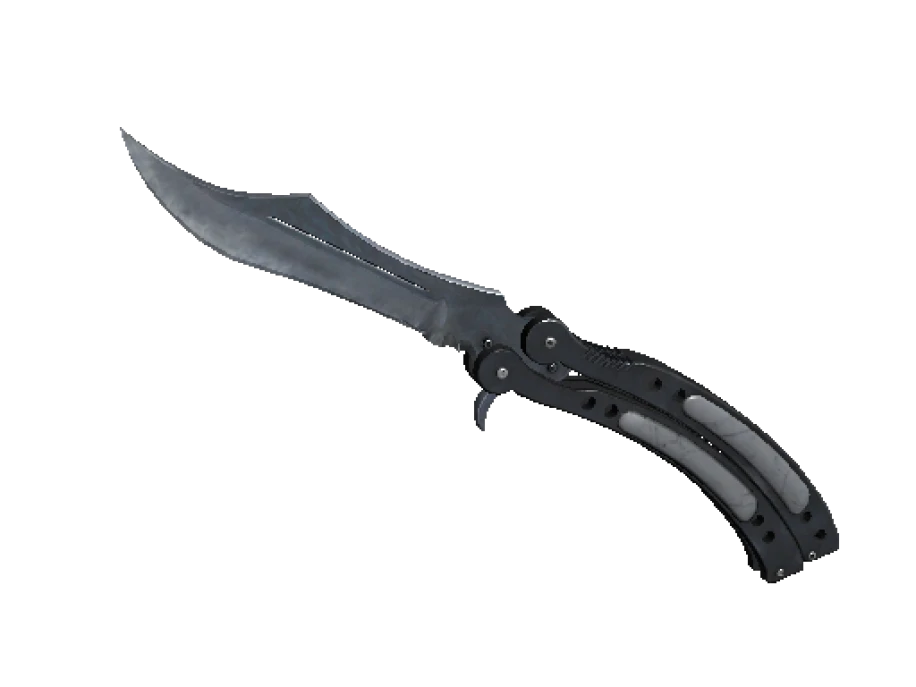
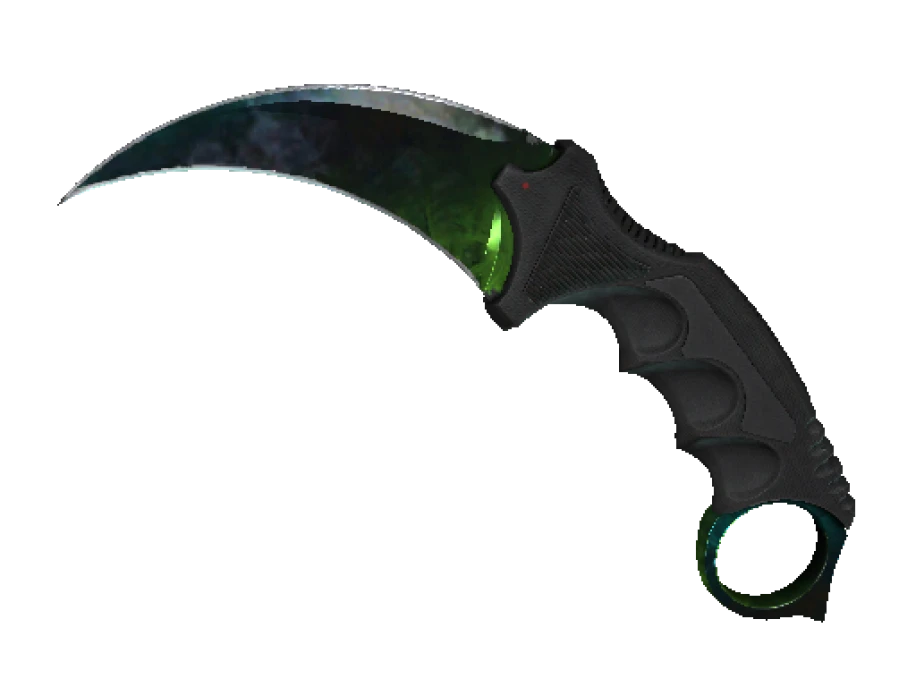
Knives wear where a real knife would: the cutting edge, the tip and the spine. On painted finishes the edge goes back to bare steel first, and at high floats the whole blade face can strip. On anodized and metallic finishes the damage shows as fine lines rather than missing paint, which is why those finishes look cleaner at the same float.
The shape matters. A Karambit holds its curved blade high in the frame, so the edge and tip are always visible. A Butterfly Knife shows its handles as much as its blade, and handle wear counts. A Bayonet or M9 Bayonet hides more of the blade behind the hand, so a worn edge costs less on screen. Shorter blades show less surface, so the same float reads as less damage.
Whatever the model, inspect the playside of the blade, then the tip, then the handle. That is the order the eye follows in a match.
Gloves
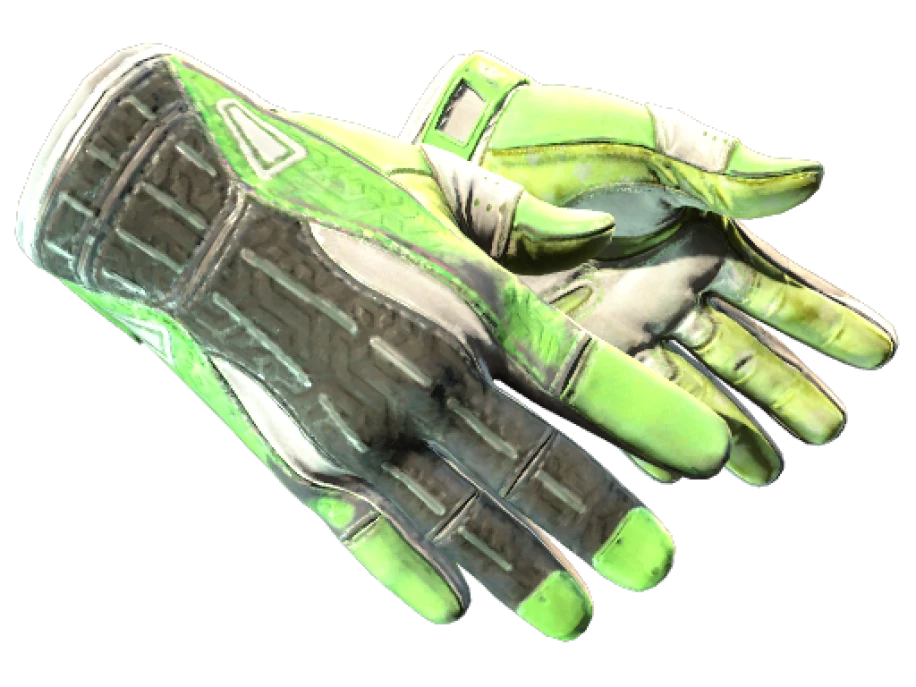
Gloves are the closest thing to the camera and they never leave the screen. Their wear is not chipped paint. The print fades, the fabric or leather looks scuffed, and seams and knuckles go pale first. Because the texture stretches across curved fingers, even mid floats look used.
Gloves also start worn. Their float range runs from 0.06 to 0.80, so no glove exists below 0.06 and none goes past 0.80. A Factory New pair is a narrow slice at the bottom, and Field-Tested pairs span everything from lightly used to heavily faded. On gloves the exact float matters more than on any weapon.
Look at the knuckles and the back of the hand first. That is what fills the frame while you hold a rifle. The palms are hidden unless you switch to a knife, and even then only briefly.
Where to look, by item
| Item | Wears first | On screen in first person |
|---|---|---|
| Rifles | Dust cover edge, receiver front, magazine edges, handguard edges | Near side of the receiver, top of the gun, magazine |
| Pistols | Slide front and top edges, ejection port | Slide, suppressor on the USP-S, little of the frame |
| Knives | Cutting edge, tip, spine, then handle | Playside of the blade, tip, part of the handle |
| Gloves | Knuckles, fingertips, seams | Back of the hand and fingers, all the time |
What to inspect first
- Open the inspect render and rotate to the playside. Ignore the thumbnail.
- Zoom on the parts that wear first for that item type. Edges before flat areas.
- Check that the artwork you are paying for sits on the visible side. Some finishes put the best part on the far side.
- Read the exact float and compare it with the finish’s range. A 0.20 on a finish that starts at 0.18 is near the top of its range.
- If it is a knife or gloves, look again. Those two show wear you will notice in every round.
Judge the side you will look at for a thousand hours, not the side in the thumbnail.
Every lot on PrefireSkins shows its exterior and, where known, its float from inspect data. Use the number to decide which parts to zoom in on. The label tells you the band. The render tells you where the band landed.