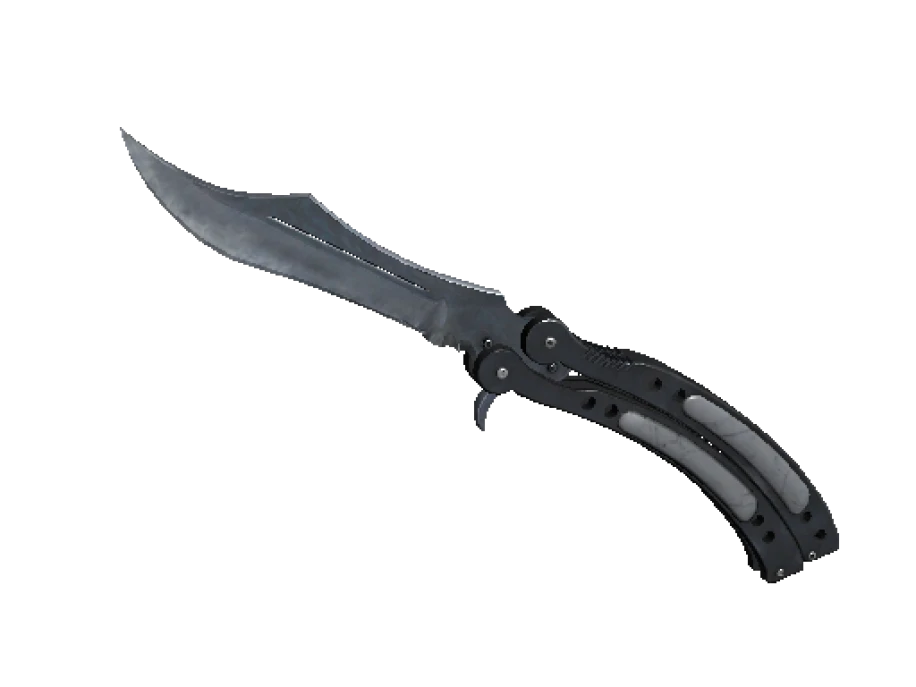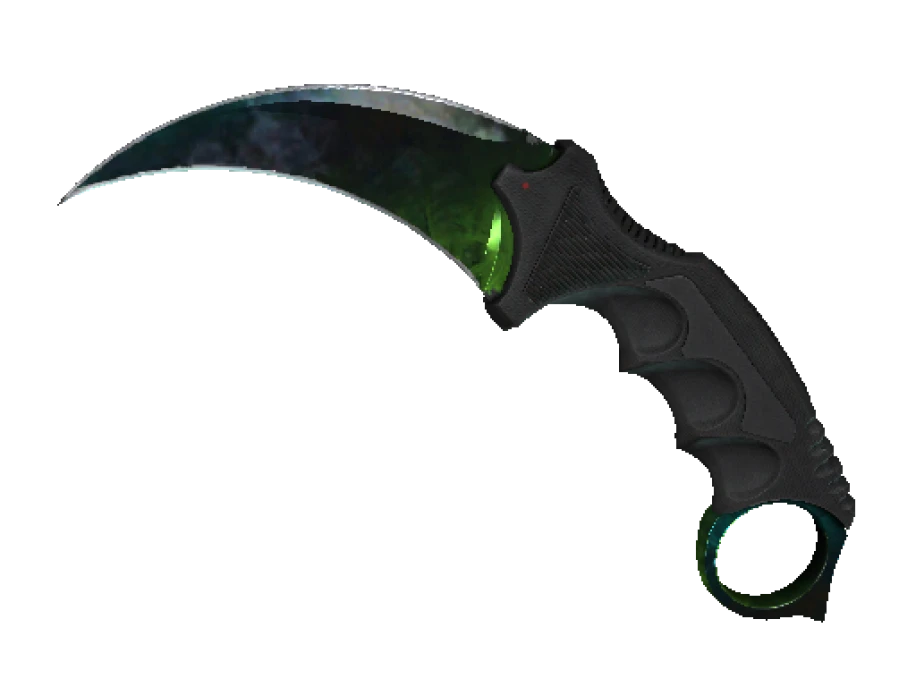



Two AK-47 | Case Hardened, same wear, same float, same everything on paper. One trades for the price of a decent rifle skin. The other trades for the price of a car. The only difference is a number between 0 and 1000 called the pattern index.
What the pattern index does
Every skin is a texture wrapped around a weapon model. The pattern index, also called the paint seed or pattern template, tells the game where to start wrapping. It is set when the item is created and never changes.
For most skins it makes no visible difference. A Redline looks like a Redline at seed 12 and at seed 812. But a handful of finishes use a large texture with strong color variation, and on those the seed decides which part of the texture ends up on the playside. That is where the money is.
Case Hardened and blue gems
Case Hardened is a patchwork of blue, purple and gold on bare steel. Most seeds give you a mix. A few land the blue section squarely on the visible side of the weapon, and those are the blue gems.
The community grades them in tiers. Tier 1 means the playside is nearly all blue. Lower tiers have more gold or purple creeping in, or the blue sits on the backside where you never see it. Prices climb steeply from tier to tier, and the top few seeds on the AK-47 and the Karambit are among the most expensive items in the game.
- AK-47 | Case Hardened seed 661 is the best known blue gem on that rifle.
- Karambit | Case Hardened seed 387 is the reference blue gem on knives.
- Five-SeveN | Case Hardened blue gems are the affordable way into the hobby. The pistol’s slide is a big flat area, so good seeds are easy to read.
Gold gems exist too, seeds where the playside is nearly all gold, and they have their own smaller following. Purple-heavy seeds usually trade close to base price.
Fade and the percentage
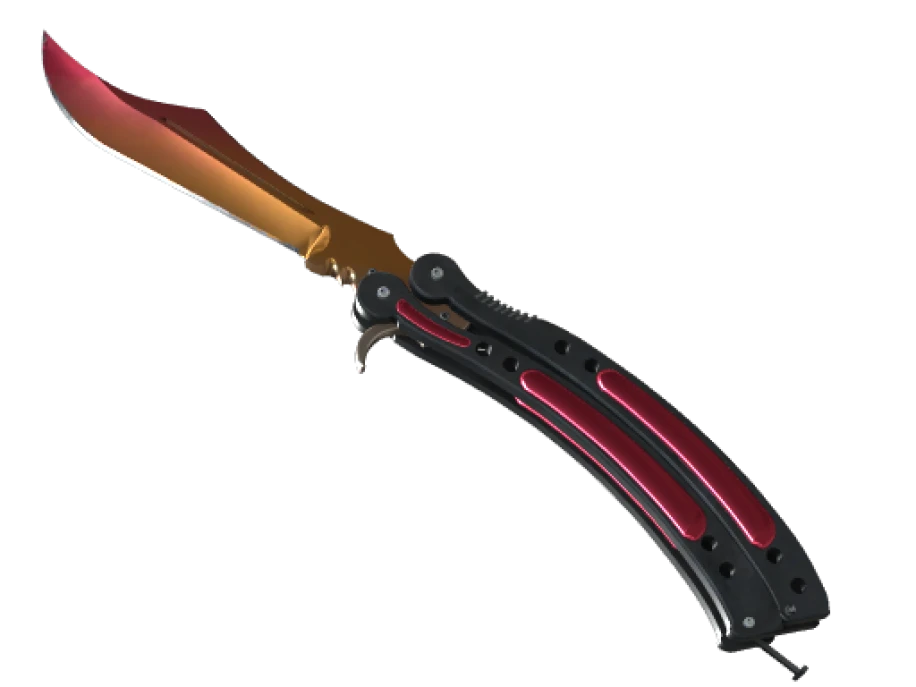
Fade is a gradient from yellow through pink to purple. The seed shifts where the gradient sits on the item, so some copies are mostly purple and pink while others carry a lot of yellow.
The fade percentage is a community measure of how far the purple end reaches across the item. Higher is more purple and pink. 100% is a full fade, with the yellow pushed back to a sliver. It is not a Valve number, it is calculated from the seed, and it only means something when you compare copies of the same weapon.
Prices follow the percentage. A full fade Karambit costs more than a 90% one, and the jump at the top end is sharp because there are only a few seeds up there. On Glock-18 | Fade the same logic applies with the pistol’s slide as the playside.
Marble Fade and Fire and Ice
Marble Fade mixes red, blue and yellow in a swirl. On knives, the seed decides how much of each color lands on the blade.
The prized outcome is Fire and Ice: red and blue only, with no yellow on the playside. There are grades below it, often called fake Fire and Ice, where a sliver of yellow sneaks in near the tip or the handle. Buyers pay a large premium for a clean Fire and Ice and a much smaller one for a near miss, so look closely at the tip and the edge before you believe a listing.
Crimson Web and the webs
Crimson Web is a red base with black spider webs. The webs are part of the texture, so the seed decides how many end up on the blade and whether they are whole or cut off at the edge.
A copy with one full web centered on the playside is good. Two full webs is better. Three whole webs on the playside is the top tier, and on a Karambit or an M9 Bayonet that combination sells for many times the base price. A web that is half off the blade counts for much less.
Crimson Web also wears hard. The red darkens and the blade dulls fast as float climbs, so a great web pattern at a high float loses much of its value. Seed and float have to be judged together here.
Slaughter patterns
Slaughter is a red anodized finish with pale, almost white streaks. The seed places those streaks, and some seeds form shapes people recognize. Diamond, heart, angel and zebra are the common names. A clear diamond on the playside of a Karambit or Bayonet carries a premium. A vague smear does not.
Slaughter is more of a taste thing than Case Hardened. The shapes are subjective, so two buyers can disagree about whether a given seed counts as a heart. That keeps the premiums smaller and the arguments longer.
How to read the seed
- In CS2, open your inventory and inspect the item. The pattern template is shown alongside the wear rating.
- For an item you do not own, take the inspect link from the listing or the trade offer and paste it into a float checker. It returns the float, the pattern index and a render.
- Look the seed up. Blue gem tier lists, fade percentage tables and Fire and Ice seed lists exist for every weapon where it matters, and they are what sellers use to justify their prices.
The render is not optional. A tier list tells you what a seed should look like. The inspect shows what it does look like on this copy at this float.
How sellers price patterns
Sellers start from the base price of the skin at that wear and add a premium for the pattern. The premium is not linear. Most seeds add nothing. The last few percent of seeds add anything from a small bump to a multiple of the base price.
| Finish | What drives the premium |
|---|---|
| Case Hardened | Share of blue on the playside, tier rank, weapon |
| Fade | Fade percentage, and the closer to 100% the steeper |
| Marble Fade | Fire and Ice with no yellow, then near misses |
| Crimson Web | Number of whole webs on the playside, plus float |
| Slaughter | A recognizable shape, centered on the playside |
Two habits protect you as a buyer. Never take the words blue gem or full fade on trust, because every seller uses them loosely. And always price the float and the seed together, since a rare pattern on a scratched blade is a rare pattern you cannot see.
Every listing on PrefireSkins is one specific item with its own seed. Read the seed, look at the render, and you will know what you are paying for.