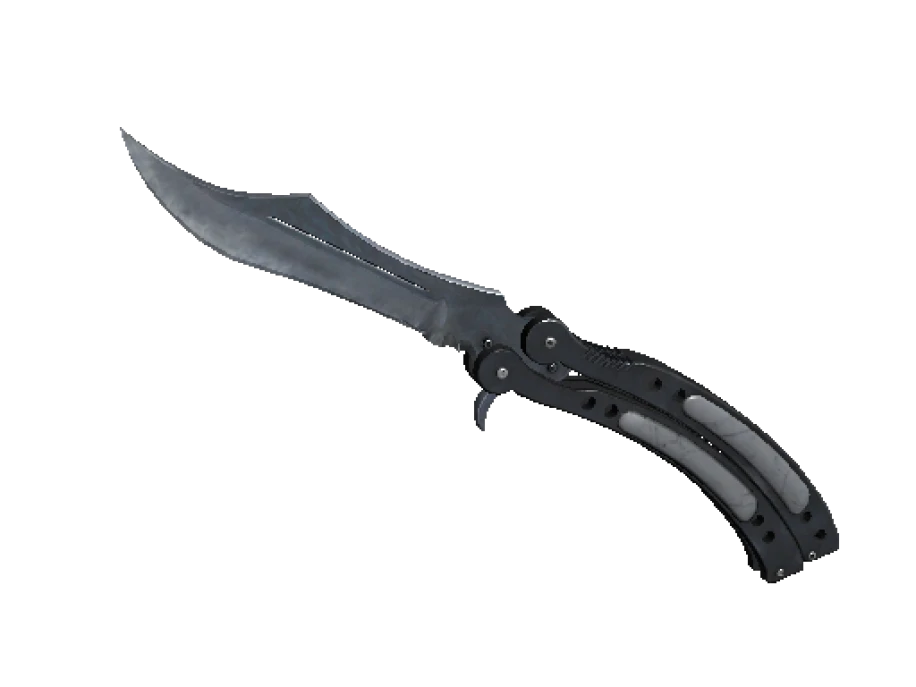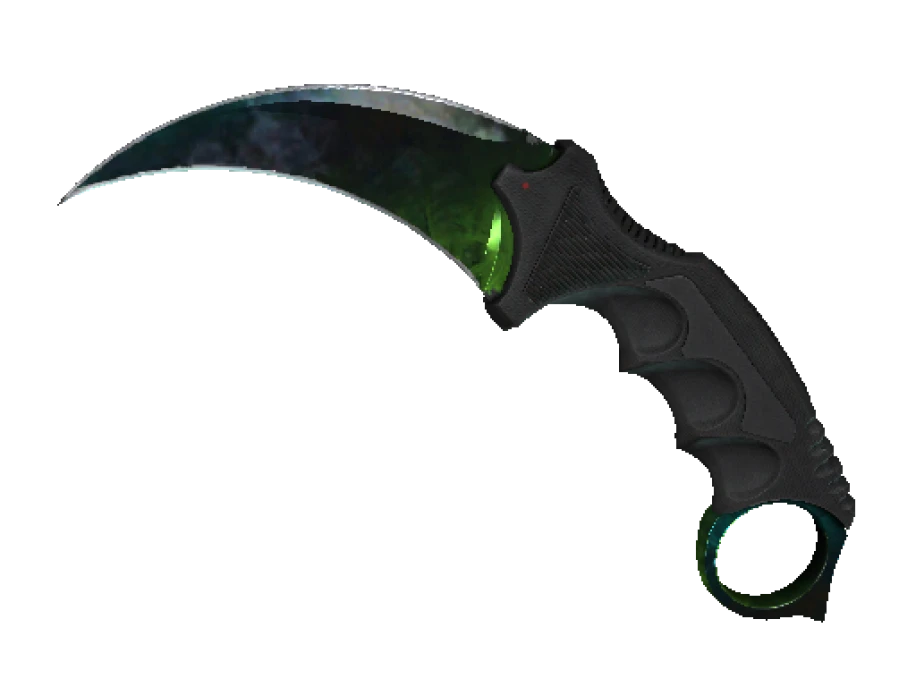



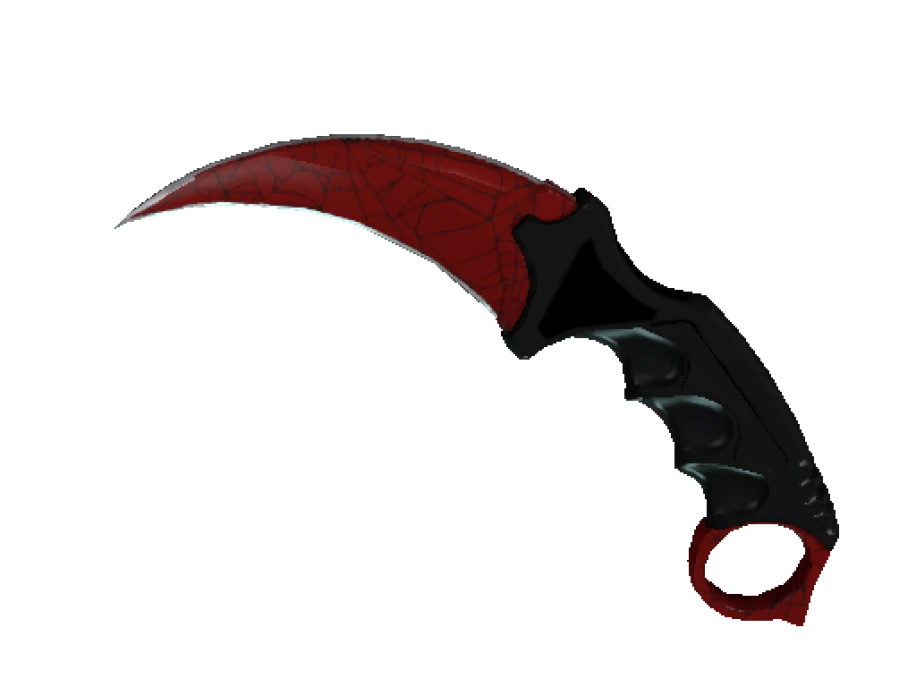
Crimson Web is a red blade with black spider webs printed over it. It is one of the original knife finishes and it now exists on nearly every knife model, plus Specialist Gloves. Two Crimson Web knives with the same name and the same wear can be priced far apart, and the reason is what the webs are doing on the blade.
What the seed decides
The webs are part of the texture, not painted per item. The pattern index, the number between 0 and 999 set when the item is created, decides which piece of that texture wraps onto the blade. Some seeds land one whole web in the middle of the blade. Some land three. Most land a web or two cut off at the edge of the blade, with the rest of the pattern on the backside or off the blade entirely.
That is the whole game. The finish is common. The seeds that place whole webs on the visible side are not.
Counting webs
The community grades Crimson Web by the number of complete webs on the playside, the side of the blade you see in first person.
- Three whole webs on the playside is the top tier. On a Karambit or an M9 Bayonet this is the pattern people chase, and it sells for a large multiple of the base price.
- Two whole webs is the next step down and still a clear premium.
- One whole web, centered, is a good ordinary copy. Most listings that mention a good web mean this.
- A web that runs off the edge of the blade is a partial. It counts for very little.
Only whole webs count. A web with a third of it chopped at the spine or the edge is not a web for pricing purposes, whatever the listing says.
Playside first, backside second
Every knife has a playside and a backside. In first person you see the playside almost all the time. The backside shows up briefly in the inspect animation and never otherwise.
A seller who writes double web without saying which side is not lying, but the webs may be on the backside. Open the inspect and look at the knife from the angle the game uses. If the webs are on the side you cannot see while playing, price it as a plain copy.
Some buyers do pay for a good backside as a bonus on top of a good playside. Nobody pays for a backside on its own.
Float hits this finish hard
Crimson Web has a raised floor. The float range starts at 0.06 and runs to 0.80, so a Factory New copy only exists in the thin slice between 0.06 and 0.07. Factory New Crimson Web knives are rare for that reason alone, before anyone counts a web.
The finish also wears badly. As the float climbs the red darkens toward brown, the blade edge goes to bare steel and the black webs lose their edges and blur into the base. A Field-Tested copy already looks tired. A Well-Worn or Battle-Scarred one can be so dark that a three-web pattern is hard to make out at all.
So the seed and the float have to be judged together. A triple web at 0.06 and a triple web at 0.40 are not the same item with different labels. They are different items.
Count whole webs on the playside, at the float you are actually buying. Everything else is noise.
Why the same seed prices differently by knife
A seed number does not carry across models. Each knife has its own shape and its own layout for how the texture wraps, so seed 200 on a Bayonet and seed 200 on a Karambit show different parts of the pattern. Web tier lists are made per knife, and a seed that is famous on one knife means nothing on another.
The blade shape matters too.
| Knife | How the webs sit |
|---|---|
| M9 Bayonet, Bayonet | Long flat blade. Whole webs fit easily, and three on the playside is possible. |
| Karambit | Curved blade with less flat area. Webs get cut by the curve, so whole webs are scarcer and the premium for them is steeper. |
| Flip Knife, Huntsman Knife | Medium blades. Two clean webs is a good result. |
| Gut Knife, Navaja Knife, Shadow Daggers | Small blades. Often not even one whole web, so the pattern premium is small. |
Then add the base price of the model. A Karambit costs more than a Gut Knife with no finish at all, and a web premium is a multiple of that base. A double web Gut Knife is a nice item. A double web Karambit is a serious purchase.
What to check before you pay
- Take the inspect link and run it through a float checker. You want the float, the pattern index and a render, not a seller screenshot.
- Look at the playside in the render. Count the webs that are whole. Ignore anything cut off.
- Read the float. Under 0.07 is Factory New and rare. Anything past Field-Tested is going to look dark.
- Look the seed up on a tier list for that exact knife. Not for a different knife.
- Compare the price against plain copies of the same knife at the same wear. The gap is the pattern premium. Decide whether the webs you counted are worth it.
On PrefireSkins every lot shows its exterior and, where known, its float from inspect data, so the float side of the check is on the page. The webs you still count yourself, and it takes a minute.
Crimson Web rewards patience. Most listings are ordinary copies with a big claim in the title. The good ones are obvious once you know what a whole web looks like.