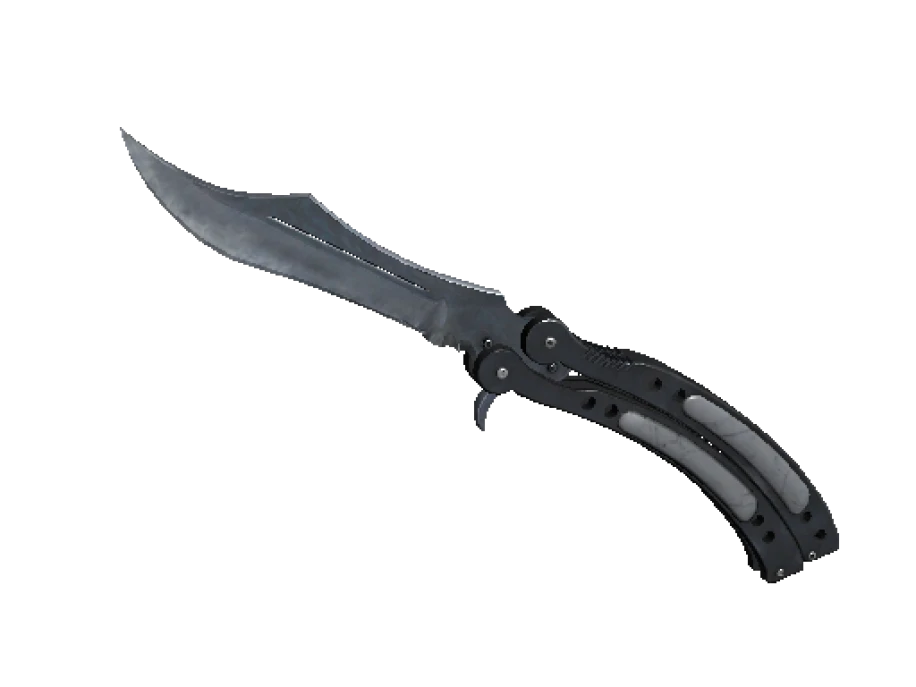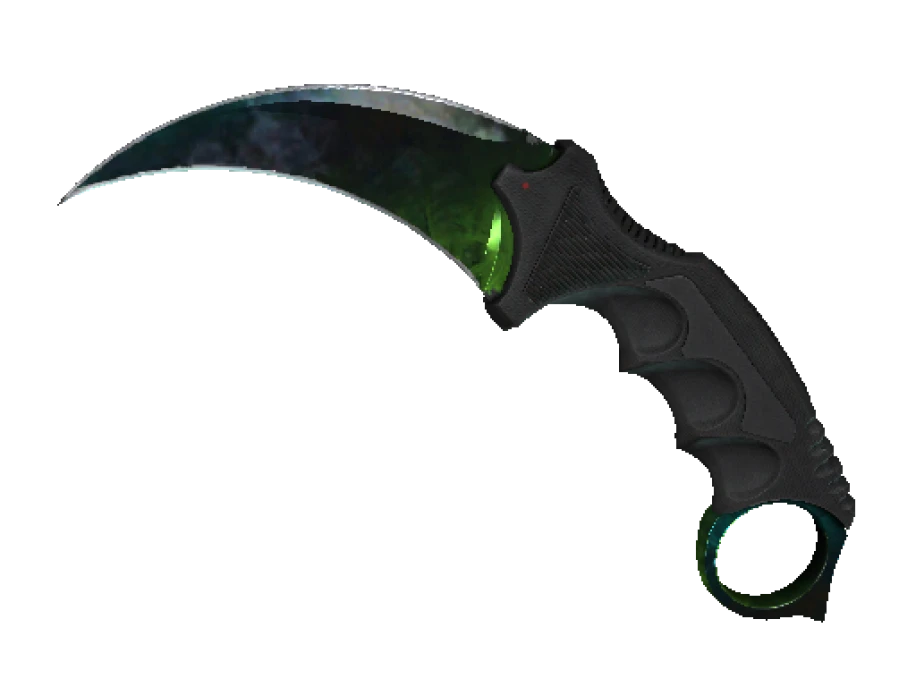



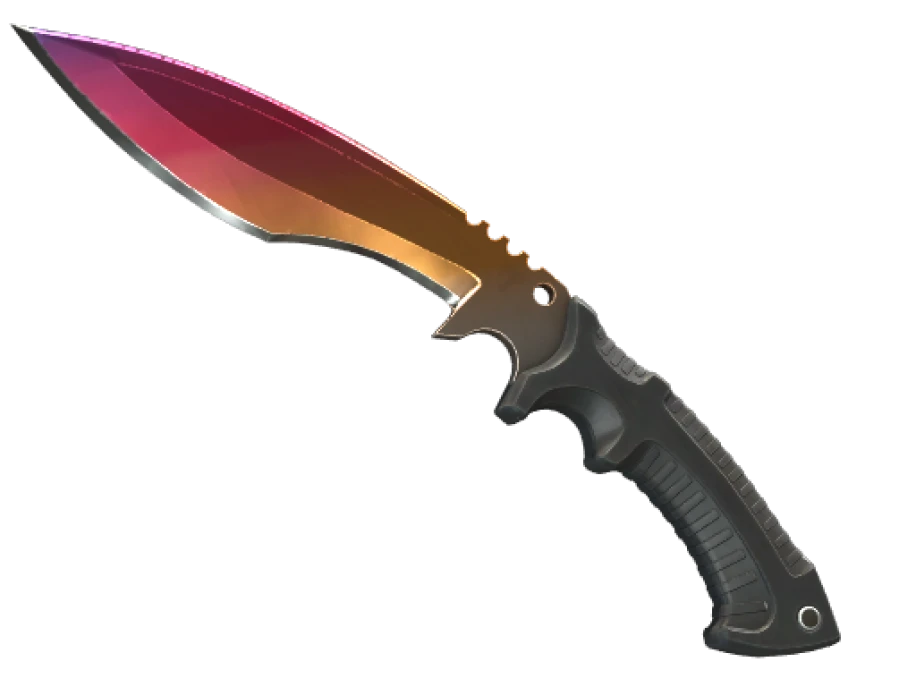
For years the knife market was five models: Bayonet, M9 Bayonet, Karambit, Flip and Gut, plus the few added one case at a time like the Huntsman, Butterfly, Falchion, Bowie and Shadow Daggers. Then Valve started adding knives in sets. The Kukri is the newest chapter in that story and the first knife model to arrive after the game moved to CS2.
How a new knife model enters the game
A knife model is tied to a case. It is the rare special item of that case, and for a while that case is the only place it drops. Nothing else creates copies. So on day one the supply of a new model is however many people have unboxed, which is very few, and everyone with money wants one. That is why a new knife opens at a high price regardless of how it looks.
The case also decides which finishes exist. A model added in a case with the classic set gets Fade, Case Hardened, Crimson Web, Slaughter, Night, Blue Steel and the camo finishes. It does not get Doppler, Marble Fade or Tiger Tooth until Valve puts the same model into a later case that carries those finishes. That has happened for earlier sets, sometimes years after the model first appeared. Whether it happens for a given model, and when, is up to Valve.
Before you go looking for a finish on a new model, check which cases the model has been in. If no case pairs them, the item does not exist.
The sets added late in CS:GO
| Set | Models | What they brought |
|---|---|---|
| Horizon | Navaja, Stiletto, Talon, Ursus | Four models at once, from a small folder to a big straight blade, with the Talon shaped like a heavier Karambit |
| CS20 | Classic Knife | The knife from the old Counter-Strike games, a nostalgia model |
| Shattered Web | Nomad, Paracord, Skeleton, Survival | Rugged fixed blades, with the Skeleton’s spinning inspect becoming the most talked-about animation of the set |
Each set launched with the classic finishes. The Chroma set, with Doppler, Marble Fade, Tiger Tooth, Damascus Steel, Ultraviolet and Rust Coat, and the Gamma set, with Gamma Doppler, Lore, Autotronic, Black Laminate, Bright Water and Freehand, came to some of these models through later cases. Which model has which finish today is a case-by-case answer and worth looking up before you search for a listing.
The sets also spread the price ladder out. In the Horizon set, the Talon prices close to the classic curved knives because it shows a lot of blade and has a ring like the Karambit. The Navaja sits at the bottom because it shows so little. Same set, same finishes, very different money.
The Kukri
The Kukri arrived with the Kilowatt Case, the first case released for CS2. The blade bends forward and widens toward the tip, with the weight at the front. It is a chopping shape, not a stabbing one, and it looks like nothing else in the game.
What matters for a buyer is the surface. The wide front section of the blade is a large flat face, so a finish has plenty of room. Fade sweeps along the curve. Case Hardened has space for a real patch of blue. Crimson Web has room for whole webs. The Kukri launched with the classic set of finishes, including Night Stripe, its version of the plain Night finish, plus a vanilla.
Because it was new and the only knife in a new case, the Kukri went through the usual early cycle: thin supply, high asks, then a slow slide as more were unboxed. That cycle is not special to the Kukri. Every model added after the originals went through it.
Why prices settle
Three things push a new model’s price down over its first months, and none of them are about quality.
- Supply catches up. While the case is in the active drop pool, new copies keep appearing. The market goes from a handful of listings to a page of them.
- The novelty fades. The first buyers pay for being first. Once the model is common in matches, that premium is gone.
- Opinions form. Players decide whether the animations feel good and whether the shape looks right in first person. A model that people like holds up. One that people find awkward drifts toward the cheap end, no matter how it opened.
The opposite happens later. When a case rotates out of the active drop pool, supply of that model slows down. The finishes that are only in that case become scarce. This is why a Horizon or Shattered Web knife in a finish that never got a second case can cost more than the same finish on an older model.
None of this is a forecast. It is the pattern every set has followed so far, and the reason a knife’s launch price tells you little about where it will sit once the dust clears.
Buying a newer model
- Look at the model in game or in a video before you commit. The newer shapes divide opinion more than the classics do, and you will be looking at it every round.
- Check the finish list for that exact model. Do not assume a Doppler exists because it exists on a Bayonet.
- Read the float and the pattern like on any knife. New model, same rules.
- Expect slower resale on the less popular models. The Talon and the Skeleton move quickly. The Survival and the Classic take longer.
Every lot on PrefireSkins shows its exterior and, where the inspect data provides it, the float. That applies to a Kukri exactly as it applies to a Karambit.